Are you comparing free vs paid web hosting and wondering which one is better for hosting your website? If yes, then stay right here.
Choosing between paid and free web hosting is an important choice that has a significant effect on your online presence. When it comes to web hosting, there are many options available, ranging from free options to paid ones, each with pros and cons of their own.
Prepare yourself with the knowledge you need to make a wise decision that fits the objectives of your website. Do this before you start your web hosting journey.
In this article, we’ll compare free vs paid hosting based on their key features. This article will explore the key factors you need to consider when deciding between free and paid hosting.
Based on that, you can decide which type of hosting is better suited for your needs. Thus, buckle up, and let’s get started!
IN THIS GUIDE
hide
Key Differences Between Free vs Paid Web Hosting
If you’re unsure about which kind of web hosting to choose, then here are some ideas to help you distinguish between free hosting vs paid hosting services.
Consider these factors to make an informed decision tailored to your company’s specific needs.
1. Pricing
The main difference between paid and free web hosting is the pricing structure. This has a huge impact on the quality and variety of services offered.
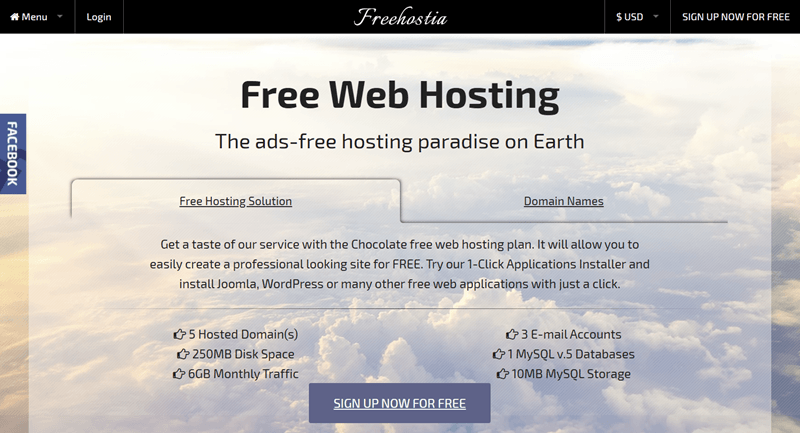
Free web hosting, as the name implies, comes without any direct monetary cost. This makes it an attractive option for individuals or small businesses with budget constraints.
However, the saying “you get what you pay for” holds true in the world of web hosting. While free hosting is an economical choice, it often comes with limitations on resources. Such as bandwidth and storage, and may lack advanced features that are crucial for a robust online presence.
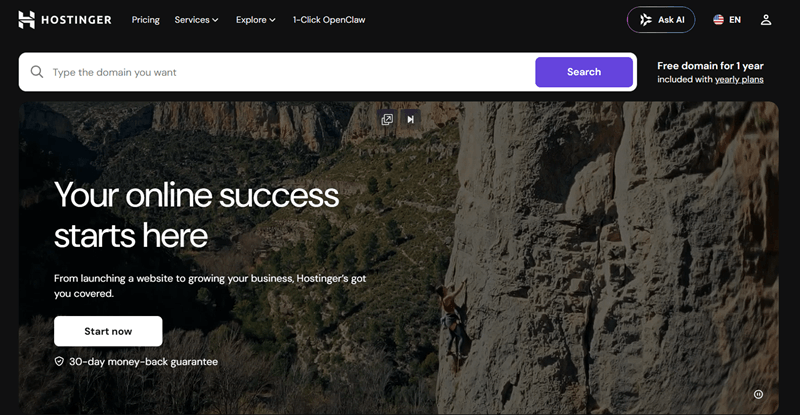
On the contrary, paid web hosting is a subscription that users pay for each month or year. This fee is associated with a broader spectrum of services, higher resource allocations, and enhanced features.
Pay-as-you-go hosting plans offer better performance, faster load times, and the ability to scale up to handle more website visitors. Paying for a hosting plan also helps the provider provide strong security, excellent customer service, and a variety of customization options.
In short, the pricing difference highlights the difference between cost-effectiveness and the full range of services offered by paid hosting.
2. Bandwidth and Storage
The second difference is the allocation of storage and bandwidth. These two elements have a direct impact on a website’s performance and capabilities.
In free web hosting, providers typically restrict the bandwidth and storage available. Hence, bandwidth restrictions can result in slower loading times and potential disruptions when a website experiences increased traffic.
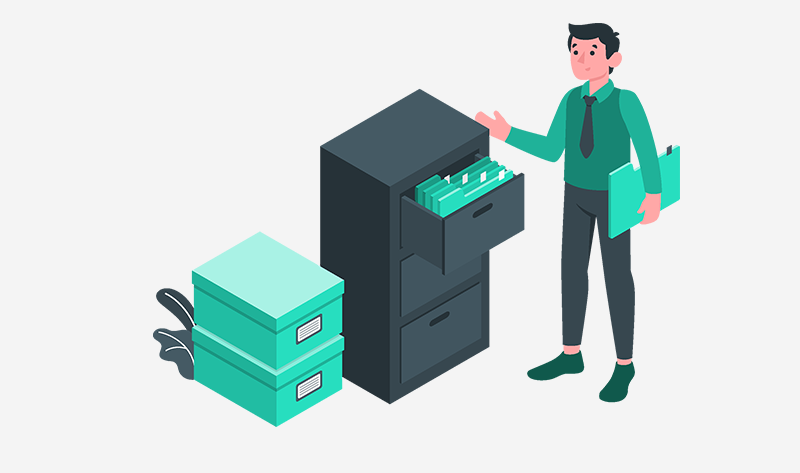
Meanwhile, the limited storage space limits the amount of data a site can store. Also, it limits the types of content it can contain.
Conversely, paid web hosting plans offer a more generous allocation of bandwidth and storage. With increased bandwidth, websites can handle higher volumes of traffic without sacrificing speed or performance.
This is particularly crucial for businesses that anticipate significant user engagement. In addition, if you’ve got a lot of space, then you can store multimedia files and databases, as well as other types of files. This makes your online presence much more dynamic.
Free hosting for your website may be suitable if it has basic features and limited resource requirements. On the other hand, paid hosting provides the flexibility and resilience needed for more complicated and high-volume websites.
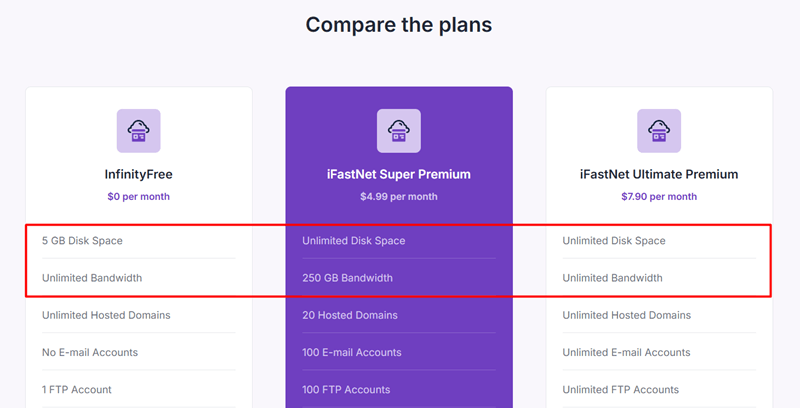
Therefore, paid hosting is much better at providing users with the flexibility to expand and optimize their online presence effectively.
3. Domain Name
The difference in domain name choices is one of the biggest differences between free web hosting vs paid hosting. In fact, it affects a website’s professionalism and branding.
Free hosting services typically provide users with subdomains associated with the hosting provider’s domain, such as yourwebsite.freehosting.com. The distinctive characteristics of a custom domain are absent from this approach. Additionally, it promotes the brand of the hosting company rather than the individual.
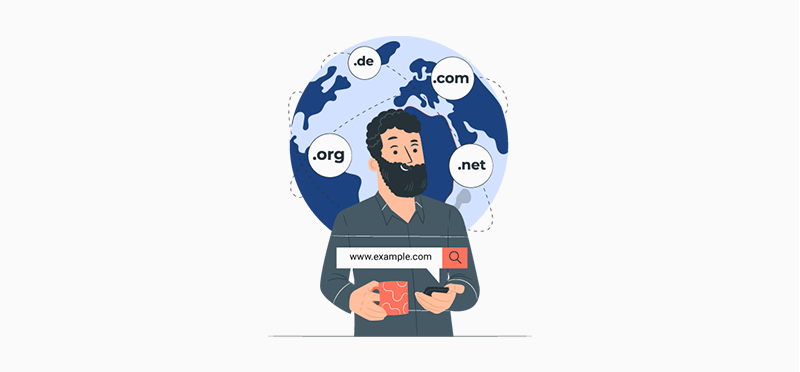
For example, a free personal blog may have a web address that is less memorable and lacks professionalism. As a result, it lacks online personal or business branding.
Conversely, paid hosting plans allow users to use a custom domain name, such as yourwebsite.com. This customization contributes to a more professional online presence and enhances the website’s credibility.
For example, if you’re a small business using a paid hosting provider, then you might choose to create a domain that matches your brand identity. This makes it easier for your customers to remember you and creates a more trustworthy impression.
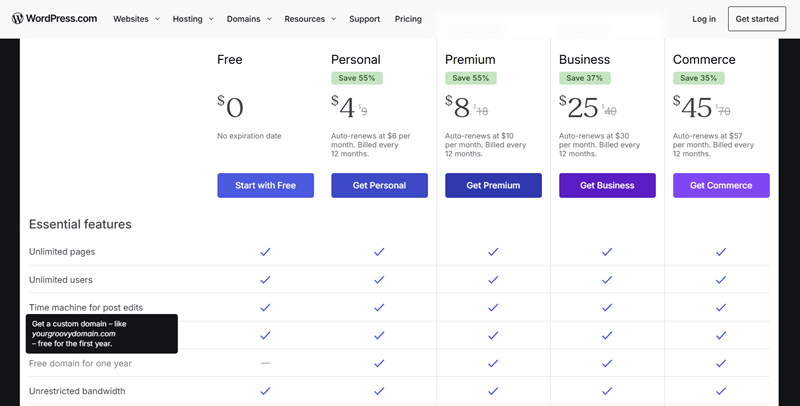
The distinction in domain name options becomes evident when comparing a free-hosted eCommerce website versus a paid hosting plan with a custom domain. With its general subdomain, the first one would struggle to present itself as professional, damaging customer trust.
In contrast, the latter, with its custom domain, can establish a distinct online identity, which is crucial for businesses. As a result, it easily builds a recognizable brand and fosters customer confidence.
This shows that getting a paid hosting package makes a website work better technically. Additionally, it makes the website look more professional and recognizable.
Check out the differences between web hosting vs domain name.
4. Customization
Free hosting providers might have restrictions on customization options. Since it prevents users from installing specific apps, changing server configurations, or developing complex features.
This lack of adaptability may cause problems for customers who need a specialized website or have specific technical requirements. For example, a free-hosted blog might not allow the integration of specific plugins and offer few possibilities for customizing the appearance.
On the contrary, paid hosting plans offer a more expansive range of customization options. Users have greater control over server configurations, allowing them to optimize performance based on their specific needs.
They can also install custom applications, implement advanced coding, and personalize the website’s design extensively.
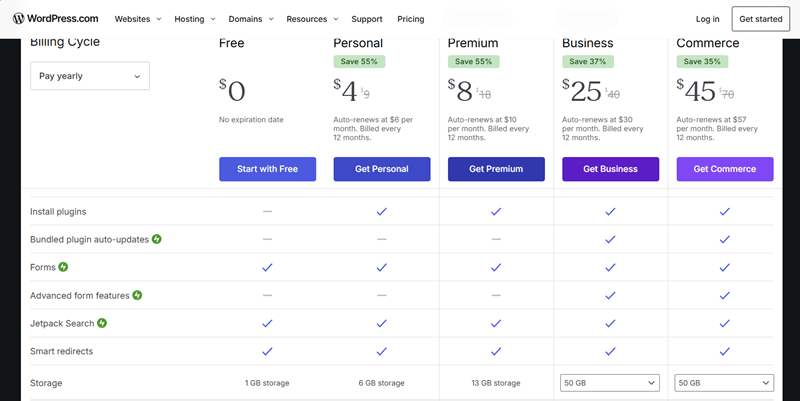
For example, a business website with a paid hosting plan can integrate eCommerce plugins and implement a unique user interface. Additionally, it can utilize advanced analytics tools to enhance functionality and improve the user experience.
A free-hosted website may struggle to stand out with its generic look and feel with limited design options. Whereas, a website with a paid hosting plan has extensive customization capabilities and can create an engaging online presence.
This distinction highlights the technical flexibility that comes with purchasing a paid hosting service. Additionally, it gives customers the ability to customize their websites to fit their own needs and vision.
5. Page Limits
If you compare web hosting plans, page limits are a big difference between free and paid web hosting. They affect how big and complex websites can be effectively managed.
Free hosting services often impose constraints on the number of pages a website can have. These disadvantages of free hosting can be a significant drawback for users seeking to create extensive content or multifaceted websites.
For example, a free educational platform struggles to include a variety of courses and information because of the limited number of pages allowed. The page limits imposed by free hosting can make it challenging to provide a comprehensive range of content.
Conversely, paid hosting plans usually provide larger or even infinite page allocations. Because of this, users can develop and grow their websites without being concerned about exceeding a limit.
A business website with a paid hosting plan can easily expand its content. This includes adding a complete product catalog, diverse service offerings, and a substantial blog section.
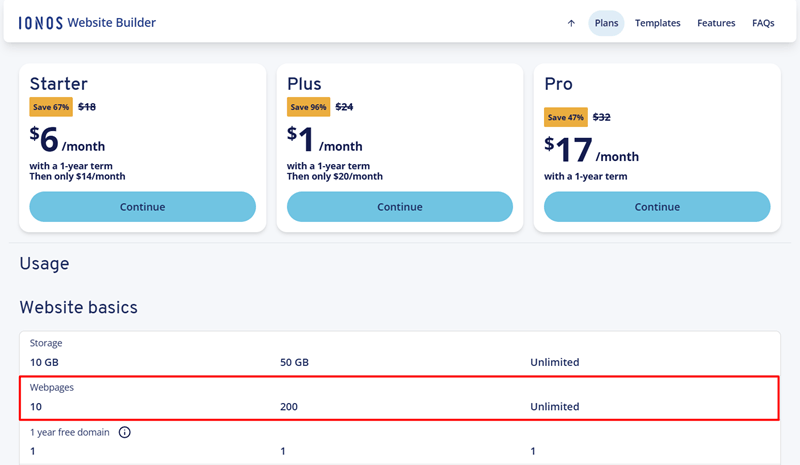
On a free-hosted website, offering a wide variety of subjects and articles can be challenging. This limitation may result in reduced interest from readers.
In contrast, the latter has expansive page limits. This allows it to seamlessly grow and diversify its content, attracting a larger audience with a broader array of interests.
Hence, choosing a paid hosting plan allows scalability and supports the development of websites with extensive content goals.
6. Performance and Reliability
Even though free hosting is less expensive, it frequently has fewer resources. Hence, it leads to slower website loads and possible outages during periods of high traffic. As a result, it generates a poor user experience, which harms the usability and credibility of a website.
For instance, a free-hosted website may struggle with sluggish load times. This can diminish the impact of its visual content and frustrate potential clients.

On the other hand, reliability and performance are given priority in paid hosting packages. Larger resource allocations empower these plans to handle increased traffic volumes effectively. This ensures quicker loading times and consistent website availability.
This becomes particularly important for eCommerce platforms and business websites where a reliable and smooth online experience is essential.
Consider an online store with a paid hosting plan, where quick and reliable access to product pages significantly impacts customer satisfaction. This, in turn, has the potential to increase sales and enhance the overall user experience.
Comparing a free-hosted blog’s occasional downtime to a paid hosting plan for a high-traffic site reveals the difference in performance. The free blog might have frequent outages, which would reduce user interaction.
Meantime, excellent and reliable performance for engaged user interaction is guaranteed by the paid plan. In conclusion, investing in a paid hosting plan directly enhances performance for a more robust and dependable online presence.
7. Security
A key distinction between paid and free hosting plan is security, which affects how well websites and the data they manage are protected.
Free hosting, while accessible, often lacks robust security measures, leaving websites more vulnerable to cyber threats. Limited or no regular backups, basic encryption, and fewer proactive security protocols can expose websites to risks.
For example, a free-hosted website is more vulnerable to hacking and data breaches, compromising site integrity and user information.
In contrast, paid hosting plans prioritize security, investing in advanced measures to safeguard websites. This includes regular backups, sophisticated encryption protocols, and comprehensive security scans.
For instance, an eCommerce website with a paid hosting plan can implement a secure payment gateway, and encrypt customer data. Besides, it establishes protocols to detect and mitigate potential security breaches, ensuring a secure online shopping experience.
A website that uses a free web hosting plan faces increased risks of unauthorized access or data loss, potentially compromising user trust.
In contrast, the latter possesses a robust security infrastructure. This enables it to provide a secure environment for users to share information and engage without concerns about compromising sensitive data.
This distinction shows how important it is to invest in a paid hosting plan to strengthen websites against potential security risks.
8. Advertisement
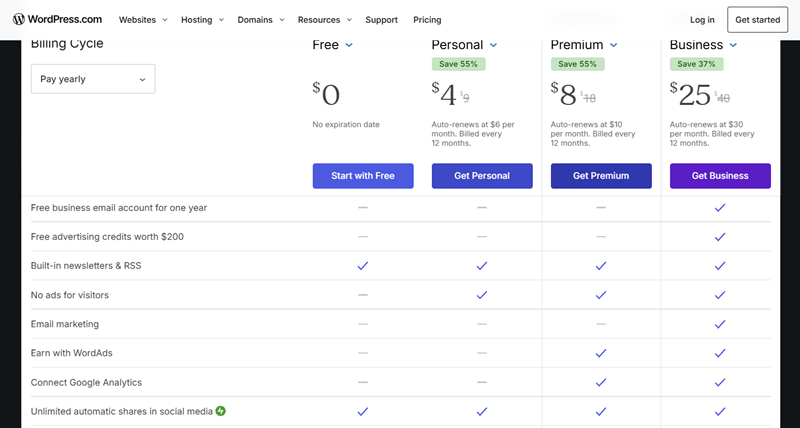
Third-party advertisements are a common way for free hosting companies to make money off of their users’ websites. Although this maintains the service’s free status, website owners may find it cheating on them.
As expected, these advertisements have the potential to be intrusive, distracting, and harmful to the user experience in general.
For example, a free-hosted photography portfolio may showcase the photographer’s work alongside unrelated and potentially jarring advertisements. Hence, this will somehow impact the professional aesthetic of the site.

Conversely, paid hosting plans typically exclude third-party advertisements from hosted websites. Users of paid plans can enjoy an ad-free environment, maintaining a cleaner and more professional appearance for their websites.
This is particularly crucial for businesses and individuals looking to create a cohesive and brand-focused online presence.
For instance, an eCommerce site with a paid hosting plan can present products without the distraction of competing ads. Hence, it guarantees contributing to a more seamless and focused shopping experience for visitors.
A website hosted on the free plan may struggle to convey a consistent brand message amid the clutter. While the paid hosting, with its ad-free environment, can present a more polished and controlled image.
Therefore, investing in a paid hosting service helps create a more professional and cohesive online presence. This difference improves the user experience and overall appearance of a website.
9. Customer Support
A key difference between premium and free web hosting services is customer support, which is also essential to the entire user experience.
Free hosting services typically offer limited customer support, leaving users to navigate technical issues or inquiries independently. This lack of assistance can be a significant drawback. For users with minimal technical expertise, customer support is essential.

For example, a small business website hosted for free may experience downtime. In such cases, finding immediate solutions can be challenging without dedicated customer support.
Paid hosting plans put a higher priority on customer service, offering consumers quicker response times and more thorough support. The availability of around-the-clock live chat assistance and dedicated support staff are common examples of this.
For instance, an eCommerce site with a paid hosting plan can rely on responsive customer support. They make sure to address issues promptly, minimizing downtime and ensuring a smoother shopping experience for customers.
The difference in customer support is noticeable when comparing a free-hosted personal blog with limited assistance options. In contrast, a paid hosting plan for a growing online store offers dedicated and more comprehensive customer support.
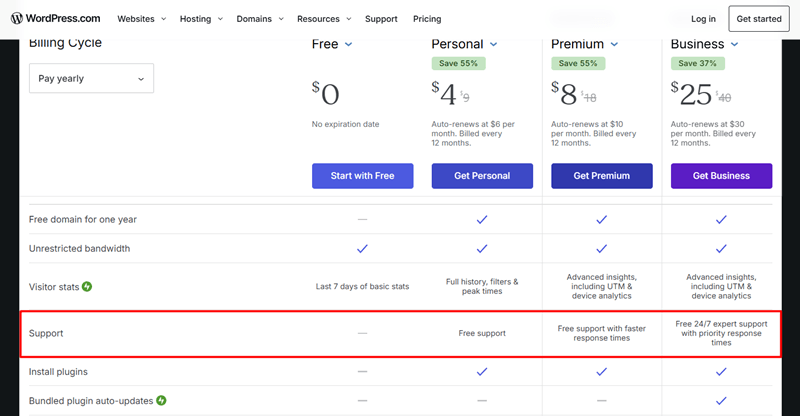
A free-hosted personal blog may encounter challenges without readily available support, potentially affecting the blog’s functionality. Whereas, a paid-hosted online store, with its dedicated customer support, can swiftly address issues. This contributes to a more reliable and user-friendly online shopping environment.
Best Free Web Hosting Services
Let’s review some of the best free web hosting services below:
| Free Web Hosting Services | Is It Free? | Number of Sites | Storage Space | Bandwidth | Starting Premium Price |
| WordPress.com | Yes | 1 | 6GB | Unlimited | $4/mo |
| InfinityFree | Yes | 1 | 5GB | Unlimited | $4.99/mo |
| FreeHosting | Yes | 1 | 1GB | Unmetered | $7.99/mo |
| Freehostia | Yes | 5 | 250MB | 6GB | $10/mo |
| AccuWeb Hosting | Yes | 1 | 2GB | 30GB | $1.99/mo |
Best Paid Web Hosting Services
Takes a look at some of the best-paid web hosting services:
| Paid Web Hosting Services | Starting Price | Number of Sites | Storage Space | Free SSL | Trustpilot TrustScore |
| Cloudways | $14/mo | Unlimited | 25GB | Yes | 4.6/5 |
| Hostinger | $2.99/mo | 3 | 20GB | Yes | 4.7/5 |
| SiteGround | $3.99/mo | 1 | 10GB | Yes | 4.9/5 |
| Bluehost | $3.79/mo | 10 | 10GB | Yes | 4.5/5 |
| HostGator | $3.75/mo | 10 | 10 GB | Yes | 4.6/5 |
Advantages of Free Web Hosting
- The fact that it’s totally free is by far the biggest advantage, even individuals on a restricted budget can use it.
- The simplified setup process makes it possible for users to launch their websites rapidly.
- It’s appropriate for small projects, personal blogs, and people who want to try building a website without having to pay for hosting.
Limitations of Free Web Hosting
- It may restrict customers’ capacity to develop unique and customized websites by limiting their customization possibilities.
- Free hosting websites frequently use subdomains from the hosting company, which can look less official than a custom domain.
- Storage capacity, bandwidth, and server resources are frequently restricted in free hosting services. Delays in loading content, site outages, and limitations on content expansion can result from this.
- Free hosting services usually place advertisements on users’ websites to make money. These advertisements can affect the look and feel of the website, and be annoying.
Advantages of Paid Web Hosting
- Instead of using a subdomain that the hosting company provides, users can register and use a custom domain name.
- More freedom and control over the content and appearance of websites are available with paid hosting packages.
- Customers benefit from quick, dedicated customer service as well as assistance with technical issues or queries.
- Increased storage, bandwidth, and processing capacity are just a few of the server resources that are frequently available with paid hosting.
- It protects websites and user data, and improved security features like SSL certificates are included in paid hosting plans.
Limitations of Paid Web Hosting
- The majority of premium web hosting services are costly, making them unaffordable for many beginners and small businesses.
- Even with an expensive price, the majority of their premium plans have limited features to offer. Such as a free domain for a year and one active website.
Check out the list of the cheap WordPress hosting services to get premium features at affordable prices. If price is not the issue, then here are the best and popular WordPress hosting companies.
FAQs – Free vs Paid Web Hosting
1. What is web hosting?
Web hosting is a service that enables individuals or businesses to publish their websites online. In order for users to access and view the website, files, and data must be stored on servers that are connected to the internet.
2. Does free hosting have a hidden cost?
To be honest, as your website gets bigger, certain free hosting services might have limitations or hidden expenses. Therefore, it’s crucial that you thoroughly read the terms and conditions.
3. What are the benefits of paid hosting over free hosting?
Better reliability, faster loading times, better safety, and greater customization choices are usually offered by paid web hosting. It also provides scalability for potential future expansion and lets you have your own unique domain name.
4. What should you consider when deciding which professional web hosting service to use?
When selecting a web hosting service, consider things like the objective of your website, the required features, and your budget in mind. To fit your unique demands, consider alternatives for scalability, performance, and support.
Conclusion
And that’s all! We’re at the final part of this free hosting vs paid hosting comparison. Hopefully, you understand the differences between free and paid web hosting services.
In conclusion, the choice between free and paid web hosting depends on your specific goals and requirements. While free hosting may seem appealing, its limitations make it less suitable for businesses and ambitious websites.
On the other hand, paid hosting offers a comprehensive solution, providing better resources, security, and support. It’s an investment that not only ensures technical advantages but also contributes to a more professional online presence.
Before deciding on a hosting service, carefully assess your website’s scale, purpose, and budget. Keep in mind that the right hosting choice can significantly impact your website’s success and user experience.
If you have any further queries about free vs paid web hosting, then please leave a comment below. We’ll try to get back to you as soon as possible.
Also, let us know what hosting services you are using to host your website. You can share your pick in the comments section below.
You may also like our other articles like the best cloud hosting services for WordPress and the best WooCommerce hosting services. Be sure to go through it once.
Do like and follow us on our social media handles Facebook and Twitter (X) to stay updated with our content.
YOU MIGHT ALSO LIKE...
We've picked you some best articles that you might be looking for. Check them now!